
House and land packages
A single project split into a land purchase and a build. We line the two contracts up so settlement and construction flow without gaps.
Construction & new build loans
Building from the ground up has more moving parts than buying an established home, and the lending is where it can come unstuck. We structure your construction loan around the build contract, manage every progress payment, and search a panel of 75 lenders so the finance keeps pace with the build.
A construction loan is not paid out in one lump sum. Instead it is released in stages that match your builder's fixed-price contract, so you only borrow as the home takes shape. The typical path looks like this:
We coordinate the valuations, the builder's invoices and the lender at every stage, so a delay on one draw does not stall the whole build. For a plain-English walkthrough of the build itself, read our guide on how construction progress payments work. The section below covers the finance side in detail, right through to the final progress payment.
A progress payment, also called a progress draw, is one instalment of your construction loan released after your builder finishes a stage of the build. The money does not come to you. Your builder claims the stage, you authorise the payment, the lender satisfies itself the work has been done, and the lender pays the builder directly.
It is the part of building most people have never dealt with before, and it is where a smooth build and a stressful one part ways. Here is the whole sequence, from the deposit to the final progress payment.
A fixed-price contract for a new home usually splits the build into a deposit plus a set of payment stages, commonly five. The stage names and definitions below are the ones used in the QBCC New Home Construction Contract, the template contract published by Queensland's building regulator. Proforma contracts from the HIA and Master Builders are also widely used, so check which one your builder has put in front of you.
| Stage | What is finished | What the lender usually needs |
|---|---|---|
| Deposit | Nothing is built yet. The deposit is paid on signing so the builder can get plans, permits and approvals moving. In Queensland the deposit on a domestic building contract is capped, at 5% of the contract price on a contract over $20,000 and more on smaller jobs. | The signed, dated building contract including the stage schedule, council-approved plans and specifications, and any contribution you have agreed to make. Lenders generally want your money in before theirs goes out, so the deposit often comes from your own funds. |
| Base (slab) | Footings, base brickwork, base walls, stumps, piers, columns, formwork and reinforcing, and the slab, bearers, joists or flooring, are completed ready for the walls to go up. | The builder's invoice for the stage and your signed progress payment authority. The builder's public liability insurance is usually required before the lender releases anything at all. |
| Frame | The building frame is complete and ready for inspection by the assessing certifier. | Invoice and signed authority, plus any certificate of inspection relevant to that stage. Some lenders order a progress inspection here. |
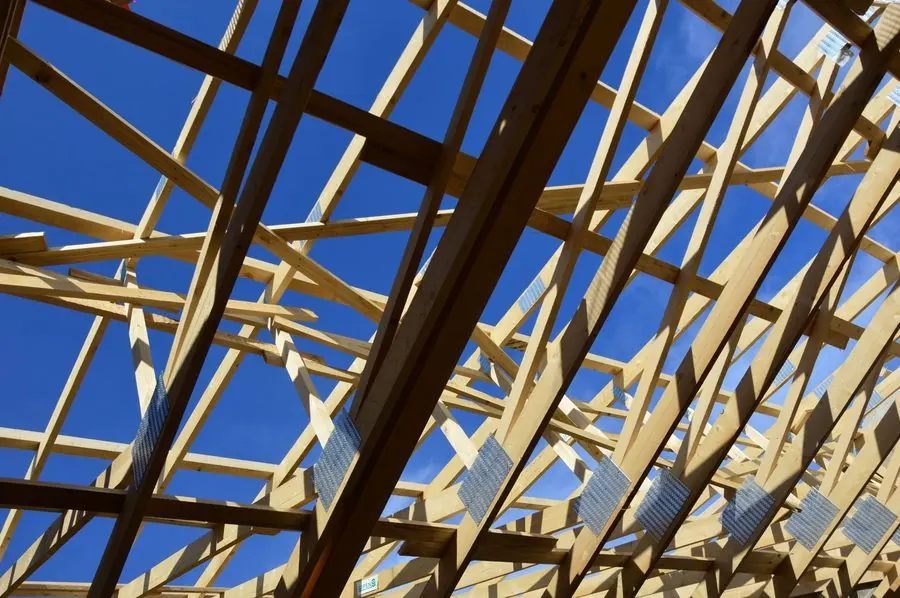
| Lock-up (the enclosed stage) | External wall cladding and the roof are fixed, structural flooring is laid, and the external doors and windows are in, even if only temporarily. The house can be locked up. | Invoice and signed authority, and any variations agreed to this point documented and priced, so the claim still reconciles to the contract schedule. |
| Fixing | Internal linings, architraves, cornices, skirting, doors to rooms, baths, shower trays, wet area tiling, built-in shelves, cabinets and cupboards are fitted and fixed in position. | Invoice and signed authority, and a reconciliation of anything you supplied or arranged outside the contract, so the numbers still add up to the contract price. |
| Practical completion (the final progress payment) | The works are finished apart from minor defects and minor omissions that will not unreasonably affect occupation. | A satisfactory final inspection or valuation, the final invoice and your signed authority, building insurance in your name, and the completion paperwork set out below. |
We do not publish stage percentages, because the split is not fixed by law and yours will be the one written into your own contract. Under the QBCC contract the percentage attached to each stage is whatever the parties put in the contract schedule, and your lender works from the payment schedule in the contract you gave it at application. Read that schedule before you sign, and keep a copy where you can find it.
Two different sets of eyes look at your build, and it helps to keep them apart.
So you do not book the lender's valuer and you do not need to chase the valuation yourself. We do that. Keep your own records of anything you pay the builder directly, because it affects what is left to draw even though most lenders will not fund against receipts.
There is no single industry timeframe. Every lender publishes its own turnaround, and it moves with how busy the credit team is. What you can pin down is the clock in your building contract, and it is usually tighter than people expect.
The single biggest thing you control is how fast the invoice and the signed authority reach the lender. Get them across the day the claim lands, not the following week. On our files that is our job, not yours.
The final progress payment is the last stage payment, made at practical completion. Practical completion is not perfection. Under the QBCC contract it is the point at which the works are complete in accordance with the contract, apart from minor defects and minor omissions that will not unreasonably affect occupation.
Under that contract the end of the build runs like this. Your builder gives you five business days' written notice of the date it expects to reach practical completion, then written notice when it considers the works have got there. On that date, or within two business days after it, you or your representative inspect the works with the builder. If you are satisfied, and the builder produces satisfactory written evidence that the inspections and approvals required under the Planning Act 2016 and the Building Act 1975 have been completed, the builder must give you a signed defects document listing the agreed and non-agreed minor defects and when they will be fixed, give you a signed certificate of practical completion, and hand the works over in exchange for the final payment.
Three things generally have to exist before that final money moves:
A signed certificate of practical completion is not approval of the work, and it does not sign away your rights. Under the QBCC contract the builder must make good defects or omissions that become apparent to you within twelve months of the date of practical completion. Once the final payment goes out, the loan usually converts from interest only to principal and interest, and repayments settle into their long-term shape. Our repayments calculator gives you a feel for what that looks like before you get there.
A variation is any change to the contract after it is signed, from moving a wall to swapping a benchtop. In Queensland they have to be in writing. The builder must give you the variation document within five business days of both parties agreeing to it and before the varied work starts, whichever comes first. The only exception is where the work has to be done urgently and it is not reasonably practicable to produce the written variation first. The document must describe the variation, the date it was requested, any delay it causes, and the change to the contract price or the method for working that change out. You then respond in writing to say whether you agree. The QBCC's own warning is blunt: undocumented variations frequently cause budget blow-outs and building disputes. Its guide to contract variations is worth ten minutes of your time.
Tell your lender before you sign a variation, not after. Lenders ask to be told immediately if the price of the building contract, a variation or a quote changes before or during construction, documentation has to be supplied, and if the change is significant a new valuation may be required. An increase has to be funded from somewhere: your own money, a contingency built into the loan at approval, or a formal loan increase that is assessed again on your income and the value of the finished home. Changing builders mid-build is a bigger reset again, usually a new signed contract, new insurance, a fresh valuation and credit approval.
Cost creep also moves your loan-to-value ratio, because a larger contract price sitting against the same finished value changes the maths, and that can bring lenders mortgage insurance back into the picture. Our LVR calculator shows where you sit, and we would rather run that with you before a variation is signed than after.
During construction you generally pay interest only on the amount that has actually been drawn, not on the full approved loan, so your repayment steps up after each stage is paid rather than starting at the top. Most construction loans are interest only for the build period and convert to principal and interest once the home is finished.
Two things are worth planning for. First, if you are renting or paying an existing mortgage while you build, you are carrying both at once, and the construction side grows every stage. Second, construction loans are time limited: lender guides set a window for finishing the build, in one published case twenty-four months from the loan offer date unless a longer period is agreed in writing. Running past the window means going back to the lender rather than quietly carrying on.
We do not publish interest rates on this site, because the number that matters is the one a lender will actually approve for your build. What we will do is show you how the repayment shape changes as the draws go out, so nothing lands as a surprise.
Almost every delayed progress payment we see comes down to paperwork, not building work. The usual causes:
None of that is hard to avoid. It just needs somebody watching the paperwork while you are watching the build. That is what we do on a construction file, so the paperwork is ready before the builder needs paying.
Building or buying house and land and want a hand with the draws? Book a free chat and we will walk through your contract's payment schedule with you.
Every kind of new build
A single project split into a land purchase and a build. We line the two contracts up so settlement and construction flow without gaps.
Buying before or during construction. We help you understand the timeline, the deposit and the finance clause before you sign.
Replacing an older home, or turning one block into more dwellings. We structure the lending around the demolition and the new build.
More complex projects, and DHOAS-eligible Defence members building a home. As a veteran-owned brokerage, we handle both.
There is a reason new builds are getting more attention from investors. Australia has changed the way rental losses and capital gains are taxed, and the changes deliberately treat a brand-new home differently from an established one.
In short, and as general information only: under the Treasury Laws Amendment (Tax Reform No. 1) Act 2026, from 1 July 2027 the ability to negatively gear an established investment home bought after budget night 2026 is being narrowed, so those losses can generally be offset against other property income rather than salary and wages. Newly built homes are exempt and keep full negative gearing, before and after that date. Investors in new builds are also given a choice in how their future capital gains are worked out. Homes already owned before the announcement are not affected while they are held.
Put simply, the tax settings now point investors toward homes that add to housing supply: house and land, off-the-plan and other genuine new builds. Whether that suits you depends entirely on your own circumstances, and the fine print, including exactly what counts as a "new build", matters.
Want to see how an investment might stack up on paper? Model the cashflow with our negative gearing calculator, which already reflects the new-build and established treatment, then talk it through with us and your accountant.
Our service is free to you: brokers are paid by the lender when your loan settles. Explore everything we do, or if you are building on the Sunshine Coast, see our local page.
Common questions
A progress payment, also called a progress draw, is one instalment of your construction loan released after your builder finishes a stage of the build. The builder claims the stage, you authorise it, the lender checks the work has been done and pays the builder directly. You generally pay interest only on what has been drawn so far, so repayments step up stage by stage rather than starting at the full loan amount.
It is the last stage payment, made at practical completion, when the works are finished apart from minor defects and minor omissions that will not unreasonably affect occupation. Before it is released the lender usually wants a satisfactory final inspection or valuation, the final invoice and your signed authority, and building insurance in your name. Under the QBCC contract the builder hands the home over in exchange for that payment and gives you a signed defects document and certificate of practical completion, and in Queensland the building certifier gives the owner a Form 21 final inspection certificate for a single detached class 1a house.
There is no single industry timeframe and each lender publishes its own turnaround. The clock that matters is in your contract: under the QBCC New Home Construction Contract the owner must pay a progress claim, or the undisputed part of it, within five business days of receiving it, and lenders ask you to allow extra time when an inspection is needed. Getting the invoice and signed authority across the day the claim lands is the part you control.
Variations must be in writing, given to you within five business days of both parties agreeing and before the varied work starts, whichever comes first, and the document has to state the change to the contract price. Tell your lender before you sign one. An increase has to come from your own funds, a contingency in the loan, or a formal loan increase that is assessed again, and a significant change can trigger a new valuation.
It is drawn in stages that match your builder's fixed-price contract, not in one lump sum. The lender pays the builder at each completed stage, and you generally pay interest only on what has been drawn during the build. On completion it converts to a standard principal and interest loan.
Yes. We arrange lending for house and land packages, off-the-plan apartments and townhouses, and knock-down-rebuilds, and match you with a lender comfortable with your build type and timeline.
Recent tax changes treat newly built homes differently from established ones, with new builds keeping negative gearing that is being narrowed for established homes from 1 July 2027. This is general information, not tax advice: confirm your position with a registered tax agent.
It depends on the lender, the land value and your position, and some buyers build using equity in land they already own. We work out a realistic figure and look for ways to reduce or avoid LMI.
No. Our home loan service is free to you. The lender pays us when your loan settles.
From slab to settlement
Talk to a broker who will keep the finance moving in step with the build. The first chat is free and there is no obligation.